My Thoughts
In Love with Love ultimately functions as both celebration and explanation. It affirms the legitimacy of romantic fiction while dissecting its mechanics with calm precision. For readers who cherish the genre, it feels like recognition. For those who question its popularity, it offers a persuasive and thoughtful answer. In short, it is a book that understands why so many are, quite simply, in love with love.
Rating
4 stars
Reflection
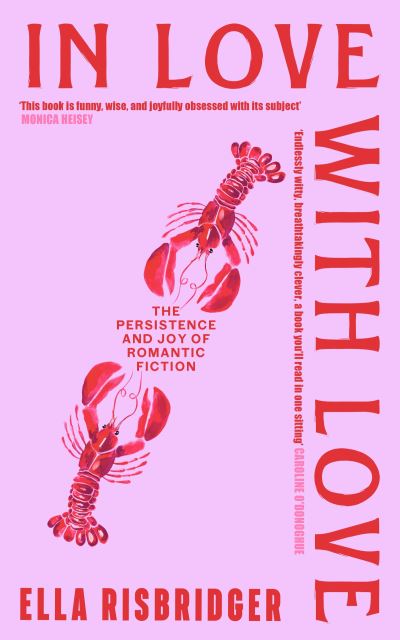
There are books one consumes with pleasure, and there are those one finishes with the quiet satisfaction of having been understood. In Love with Love: The Persistence and Joy of Romantic Fiction by Ella Risbridger belongs decidedly to the latter category. Rather than offering a conventional narrative, Risbridger presents an expansive and thoughtful essay on the nature of romantic fiction—its history, its subgenres, its critics, and, most importantly, its readers. The work opens with a graceful introduction to romance as both literary tradition and cultural phenomenon, establishing at once that this is not a frivolous defense of the genre but a considered meditation upon its enduring appeal. One of the book’s most compelling features is its breadth. Risbridger moves with ease from the refined courtships of Jane Austen to the glossy excess of contemporary billionaire romances, from fairy-tale echoes of Beauty and the Beast archetypes to the brooding, morally ambiguous heroes who populate modern shelves. She does not shy away from fantasy romance, “romantasy,” or even explicitly erotic subgenres. Instead, she treats each with an equal measure of seriousness, asking not whether these stories are respectable, but why they are desired. Her answer, though elegantly layered, is disarmingly simple: readers of romance crave joy. In a world that is often unstable, opaque, and merciless in its consequences, romance offers a promise—an assurance of emotional resolution. Yet Risbridger's insight goes further. Romance, she suggests, provides not merely happiness but structure. Within its pages, the rules are known. The reader understands the arc: conflict will arise, misunderstandings will sting, but love will prevail. The choices characters make unfold within a contained system; consequences exist, but they are narratively proportioned. There are no catastrophic unknowns, no existential spirals beyond the boundaries of the genre’s covenant with its audience. In this way, romance becomes not an escape from reality in a dismissive sense, but a controlled imaginative space. Real life overwhelms with infinite possibilities and unclear rules; romance reduces chaos to a comprehensible pattern. It grants readers the rare comfort of certainty. One might even argue that this predictability is not a weakness but the genre’s greatest strength. What distinguishes Risbridger work is her refusal to condescend. She neither mocks the “gruff hero” trope nor dismisses the appeal of fantastical or erotic elements. Instead, she interprets them as expressions of longing—variations on a central human desire to be chosen, valued, and safe. The analysis is both affectionate and incisive, making the book accessible to devoted romance readers while also serving as an illuminating introduction for skeptics. If the essay has a limitation, it lies perhaps in its thematic clarity: those already convinced of romance’s worth may find its central argument familiar. Yet even then, the pleasure resides in seeing one’s private reading habits articulated with intelligence and respect.